 SVR S&T Dept.

SIGNALLING NOTES - Chris. Hall
Our work during the last quarter has been dominated by the preparation for the visit of a large crane on 2 September. Taking the story forwards you will recall that we had dug a hole and filled it with concrete on 14th and 15th July. After a lot of painting, we were ready to assemble the new signal in the car park on 12th August using a somewhat smaller crane. By the end of the day on 2nd September, the new signal had been erected and the three dolls and two disc signals had been bolted into place. The work thus fell into three stages:
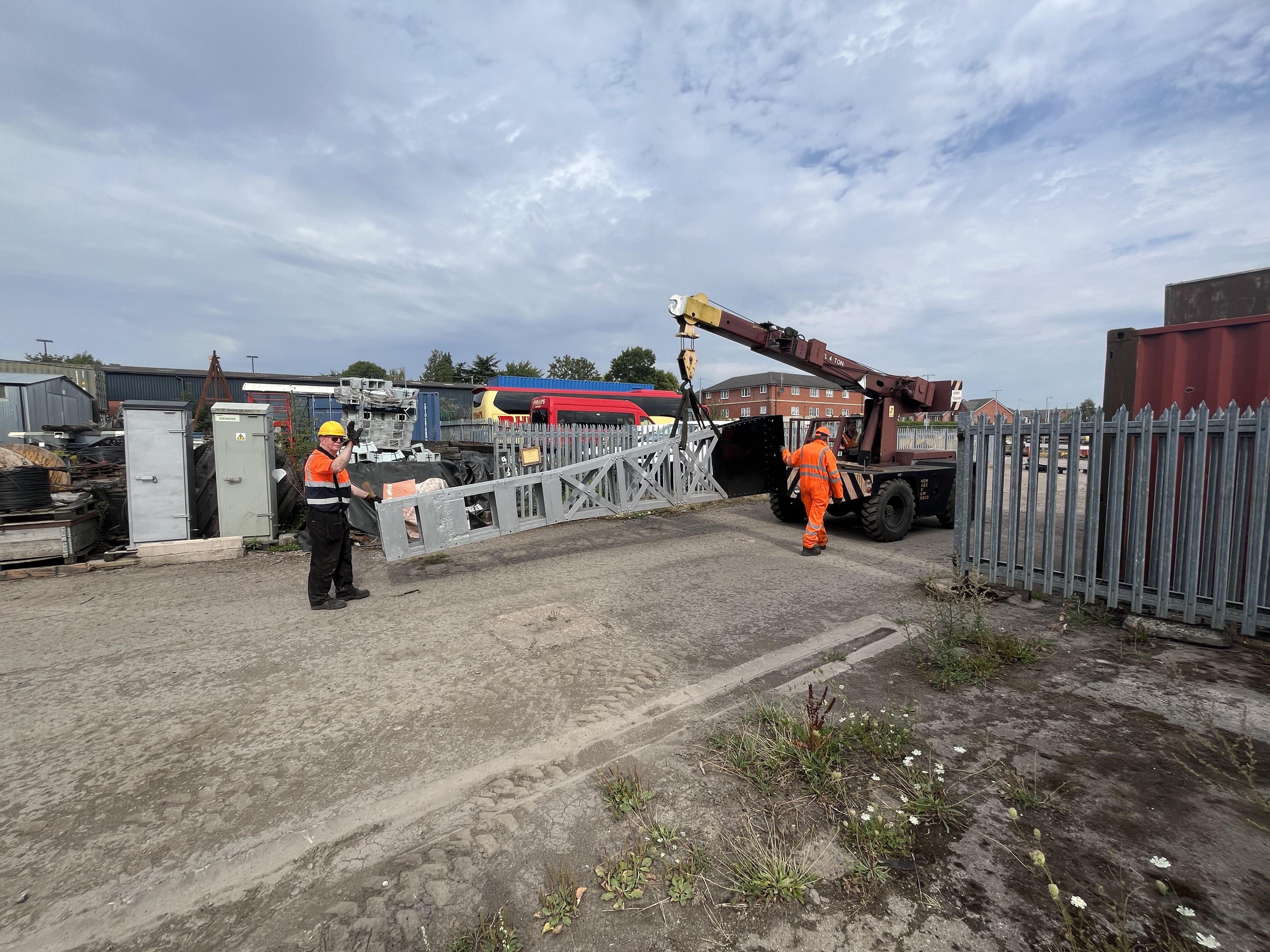 Stage 1: assembling the kit of parts in the car park on 12th August - the plan is to assemble the main structure, including dolls, cut the wooden planking of the deck to accommodate the dolls, then remove the dolls and discs and the central section of planking ready for the lift.
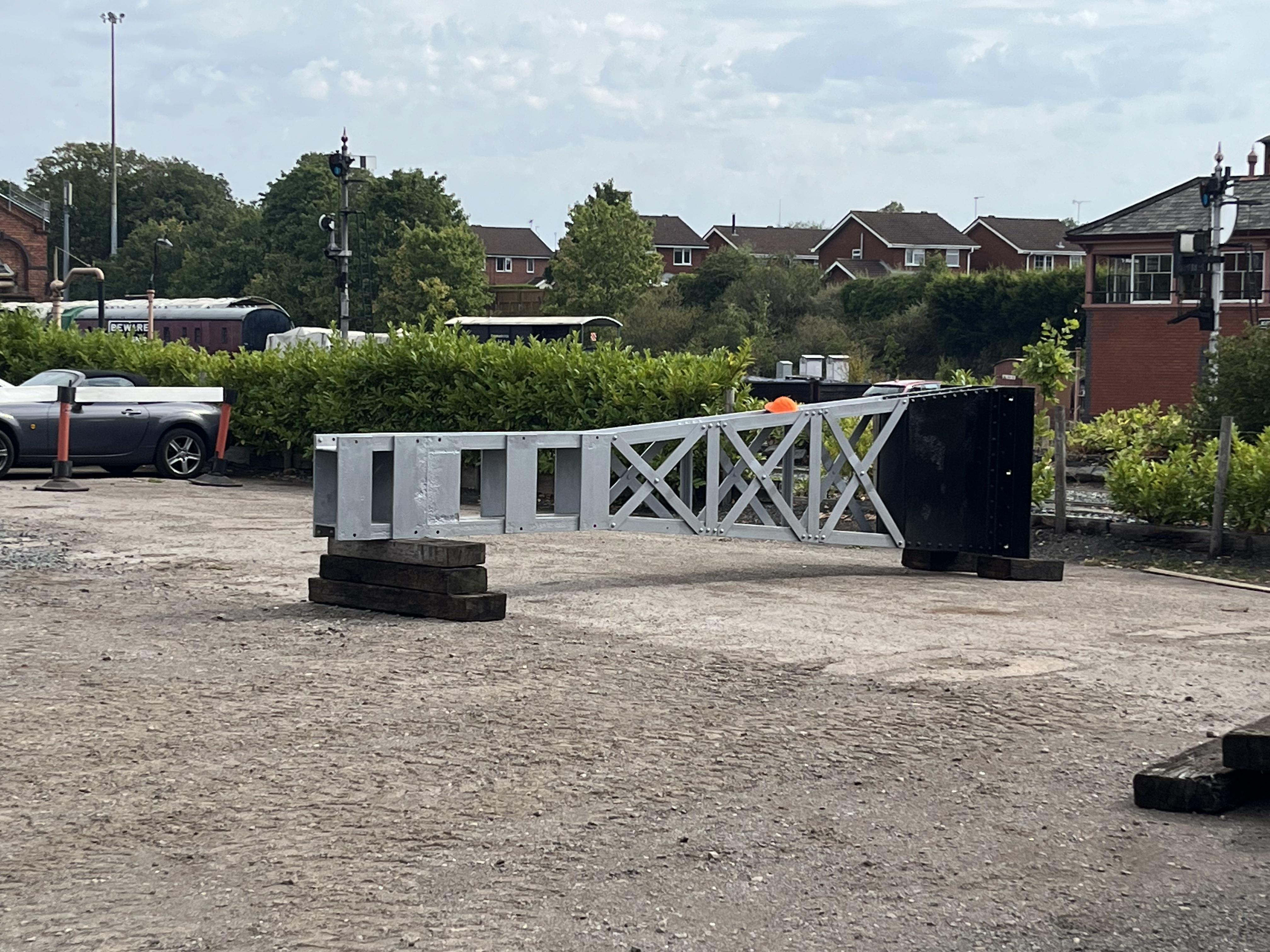 Stage 1: assembling the kit of parts in the car park on 12th August - the plan is to assemble the main structure, including dolls, cut the wooden planking of the deck to accommodate the dolls, then remove the dolls and discs and the central section of planking ready for the lift.
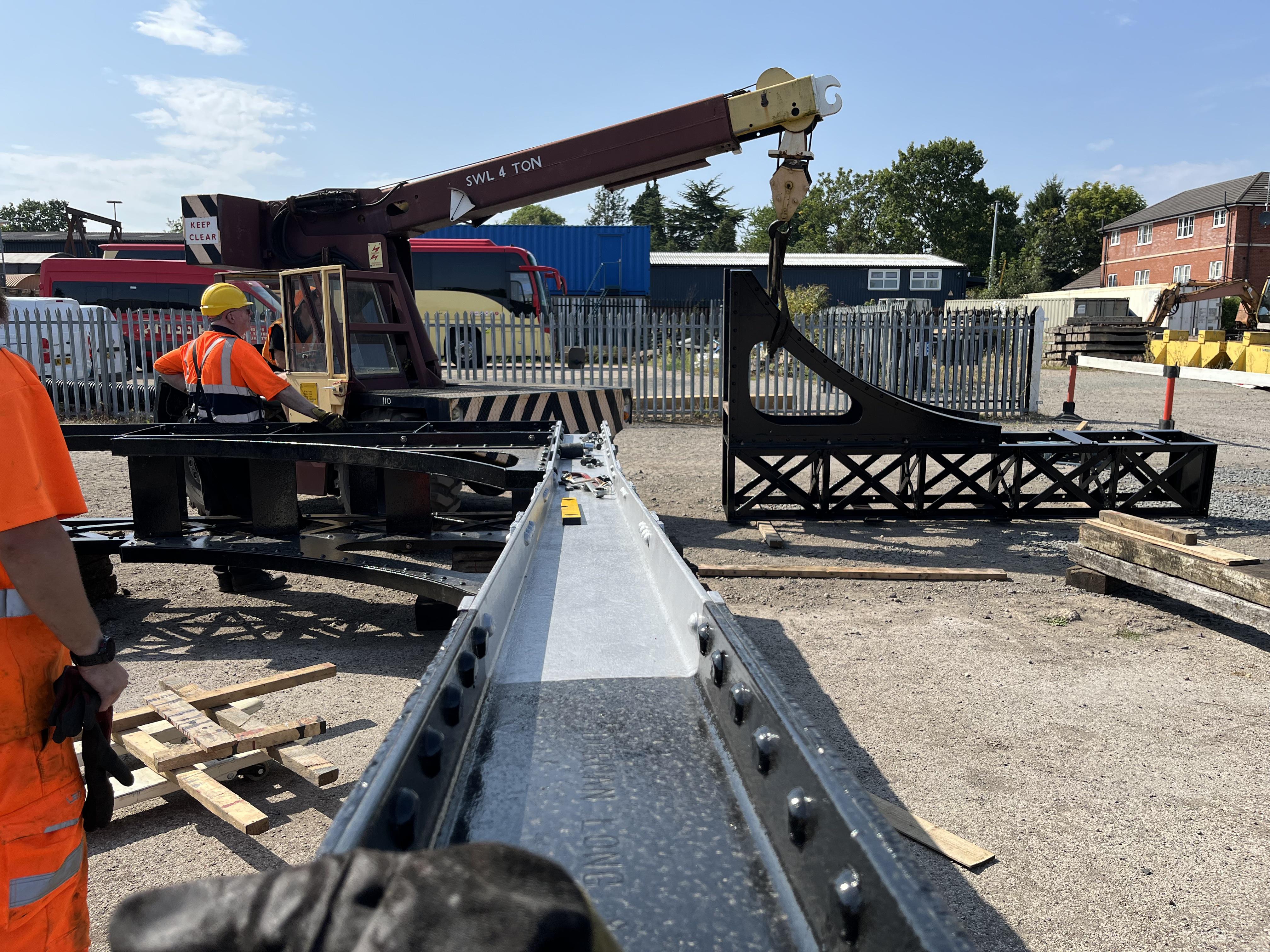 Stage 1: assembling the kit of parts in the car park on 12th August - the plan is to assemble the main structure, including dolls, cut the wooden planking of the deck to accommodate the dolls, then remove the dolls and discs and the central section of planking ready for the lift.
 Stage 1: assembling the kit of parts in the car park on 12th August - the plan is to assemble the main structure, including dolls, cut the wooden planking of the deck to accommodate the dolls, then remove the dolls and discs and the central section of planking ready for the lift.
 Around lunch time we were interrupted by the arrival of the wooden post for Arley‘s Up Distant (signal AY25) so we diverted the crane to putting the new signal post onto the ground. We would put it into the shed under cover for painting once the various bits of the signal had been taken out of the shed and space cleared for the post.
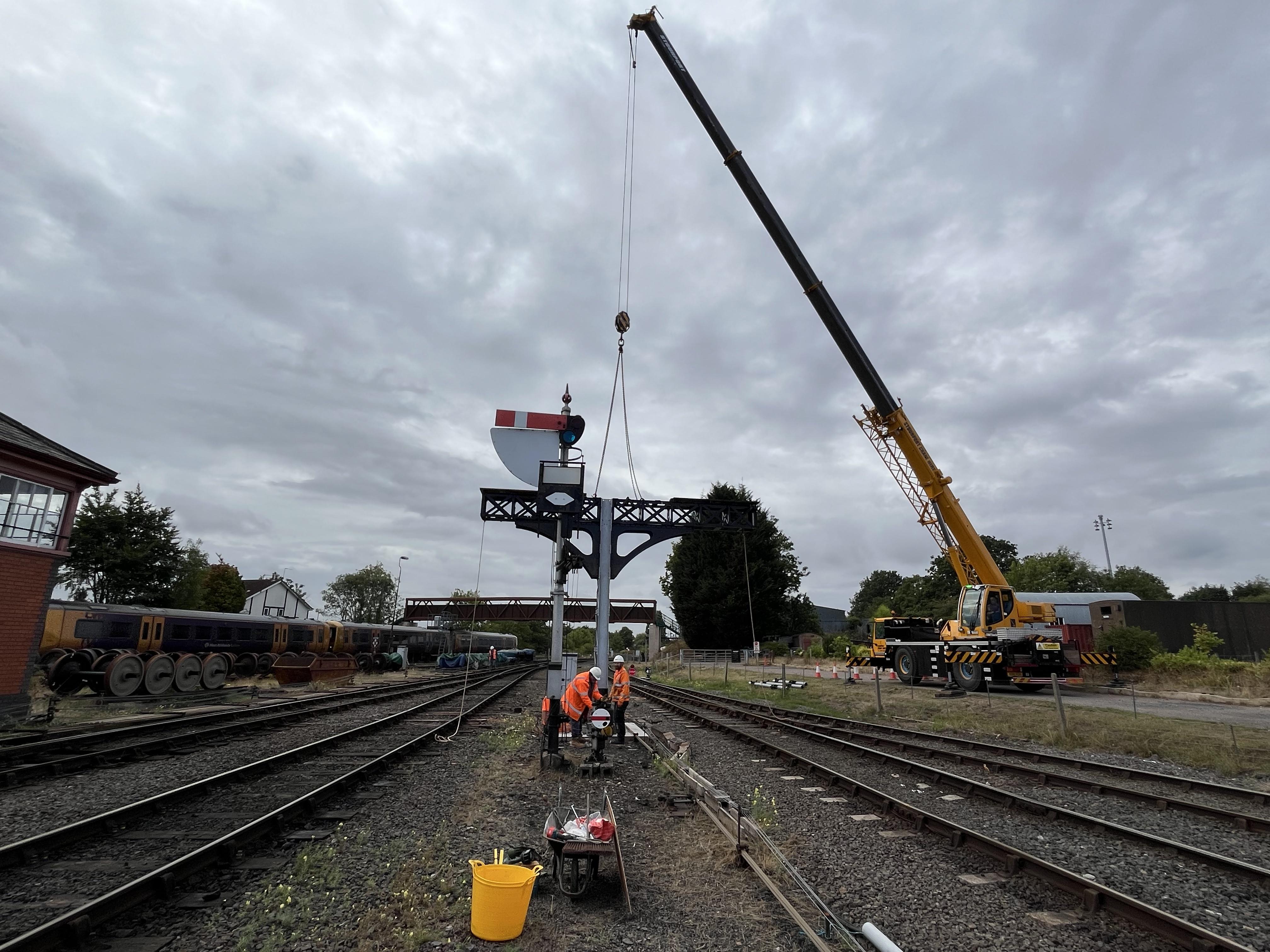 Stage 2: a rather larger crane is needed to lift the assembled signal into place - some 3½ tons - so that we can bolt it into place. Then we need to lift the dolls into place and use the MEWP to bolt them to the structure. Finally to lift and bolt the disc signals in place.
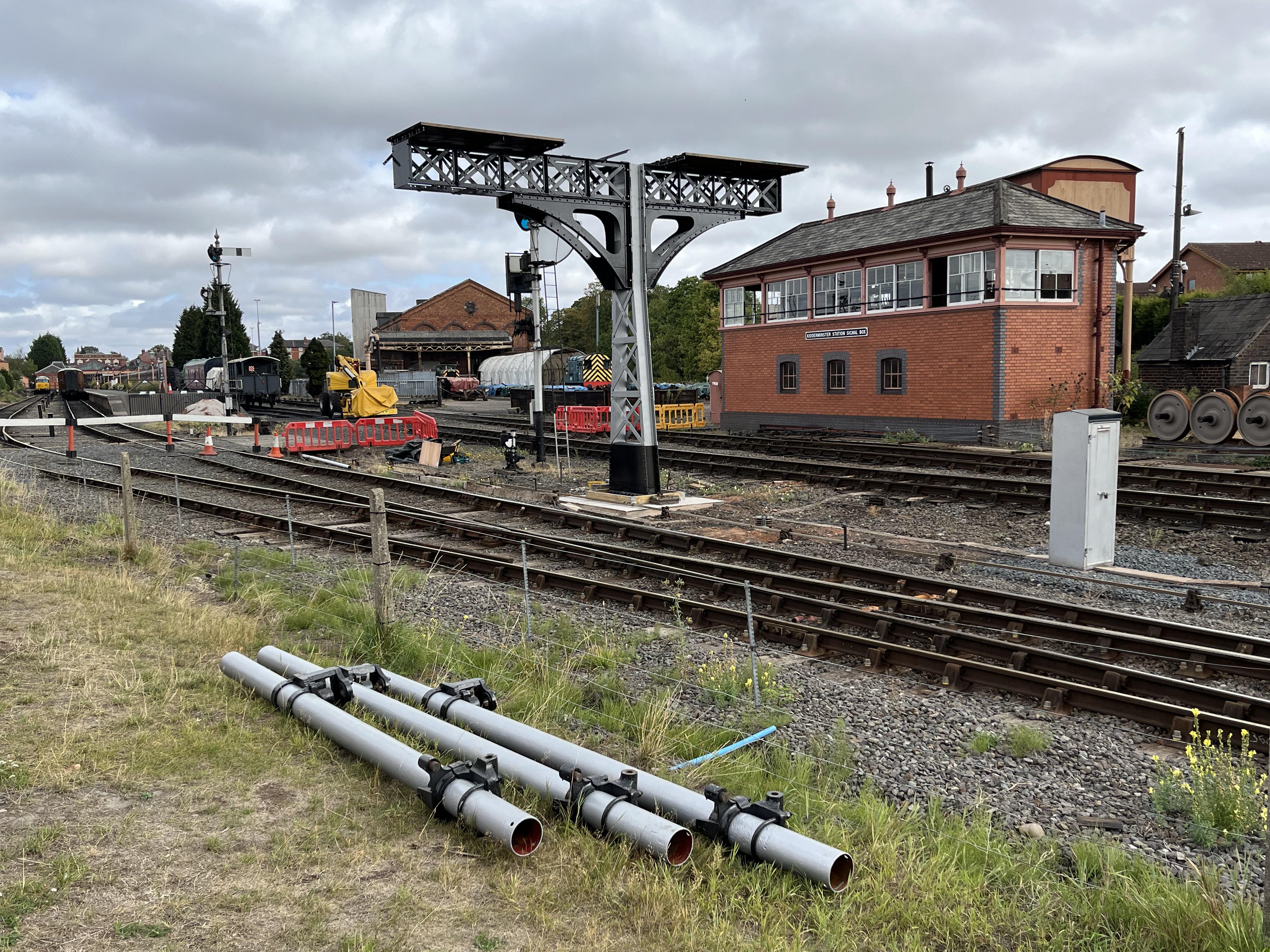 Stage 2: a rather larger crane is needed to lift the assembled signal into place - some 3½ tons - so that we can bolt it into place. Then we need to lift the dolls into place and use the MEWP to bolt them to the structure. Finally to lift and bolt the disc signals in place.
 Stage 2: a rather larger crane is needed to lift the assembled signal into place - some 3½ tons - so that we can bolt it into place. Then we need to lift the dolls into place and use the MEWP to bolt them to the structure. Finally to lift and bolt the disc signals in place.
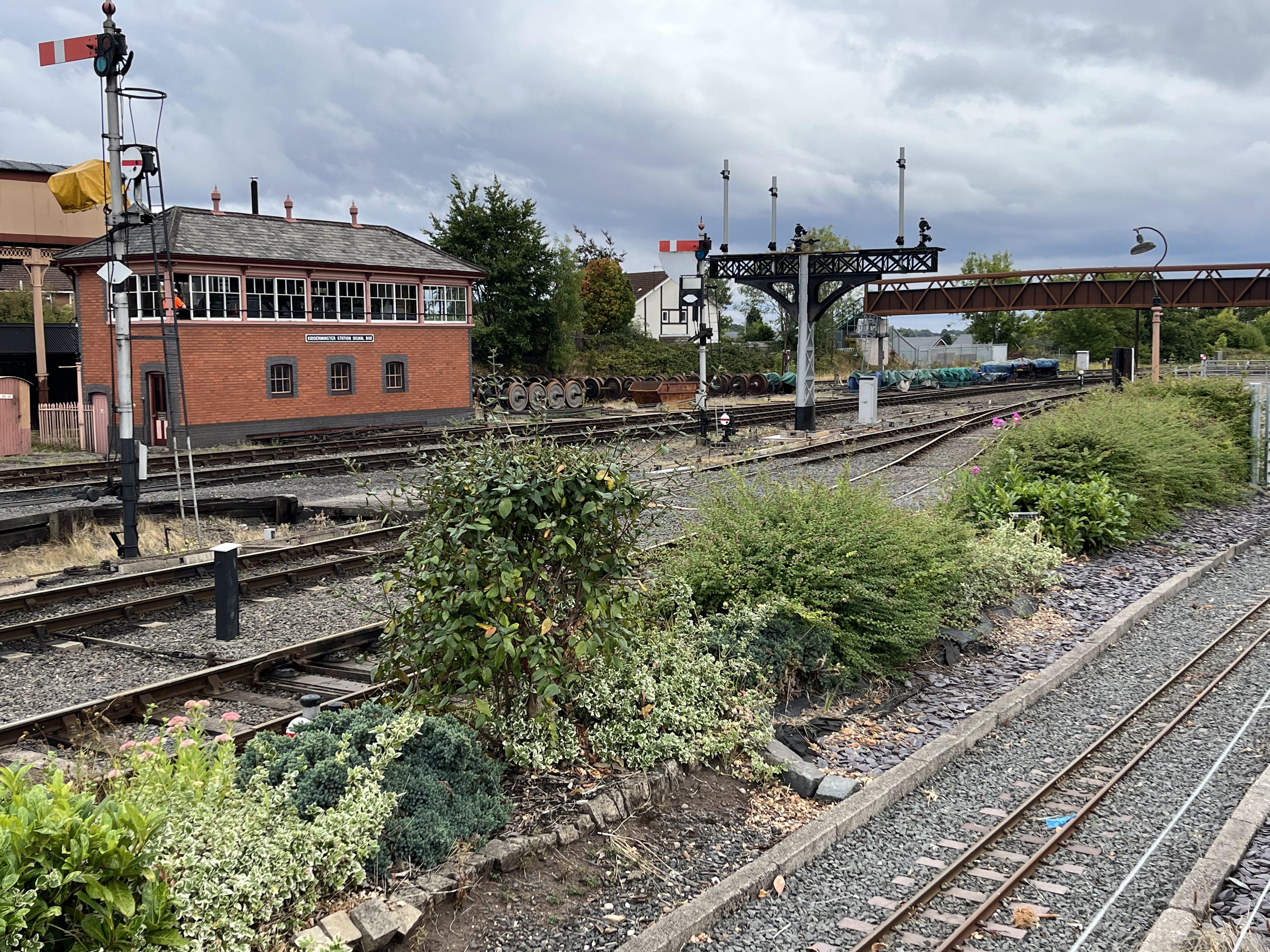 Stage 2: a rather larger crane is needed to lift the assembled signal into place - some 3½ tons - so that we can bolt it into place. Then we need to lift the dolls into place and use the MEWP to bolt them to the structure. Finally to lift and bolt the disc signals in place.
At the end of stages 1 and 2, the new signal is still a skeleton and the existing signalling remains in use. Stage 3 saw the platform 1 side of the new signal brought into use.
 Stage 3: signal 58/62, the temporary platform starting signal and route indicator was stripped down on 11 September as the platform 1 side of the new signal had been commissioned that day ahead of time and was in use for the Autumn Gala. The views above on 14 September show the bare post of the old signal but the platform 2 starter will remain in use until after the Diesel Gala when the old signals will be removed.
 Stage 3: signal 58/62, the temporary platform starting signal and route indicator was stripped down on 11 September as the platform 1 side of the new signal had been commissioned that day ahead of time and was in use for the Autumn Gala. The views above on 14 September show the bare post of the old signal but the platform 2 starter will remain in use until after the Diesel Gala when the old signals will be removed.
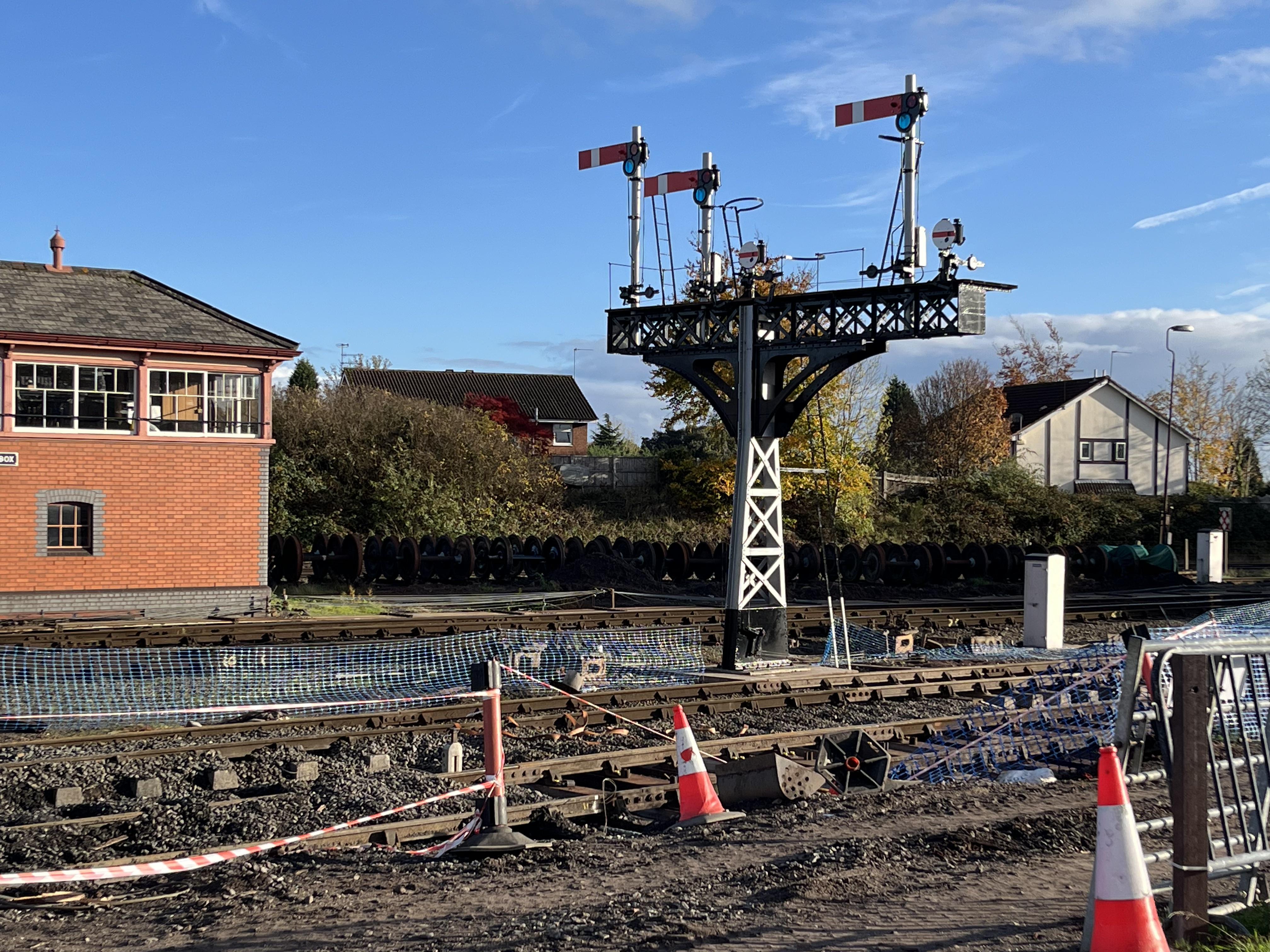 on 2nd November platform 2 is still under possession for P-Way work and signal 59 (platform 2 starter) is not yet connected. We still have work to do - fitting detection, bonding and connecting track circuits etc.
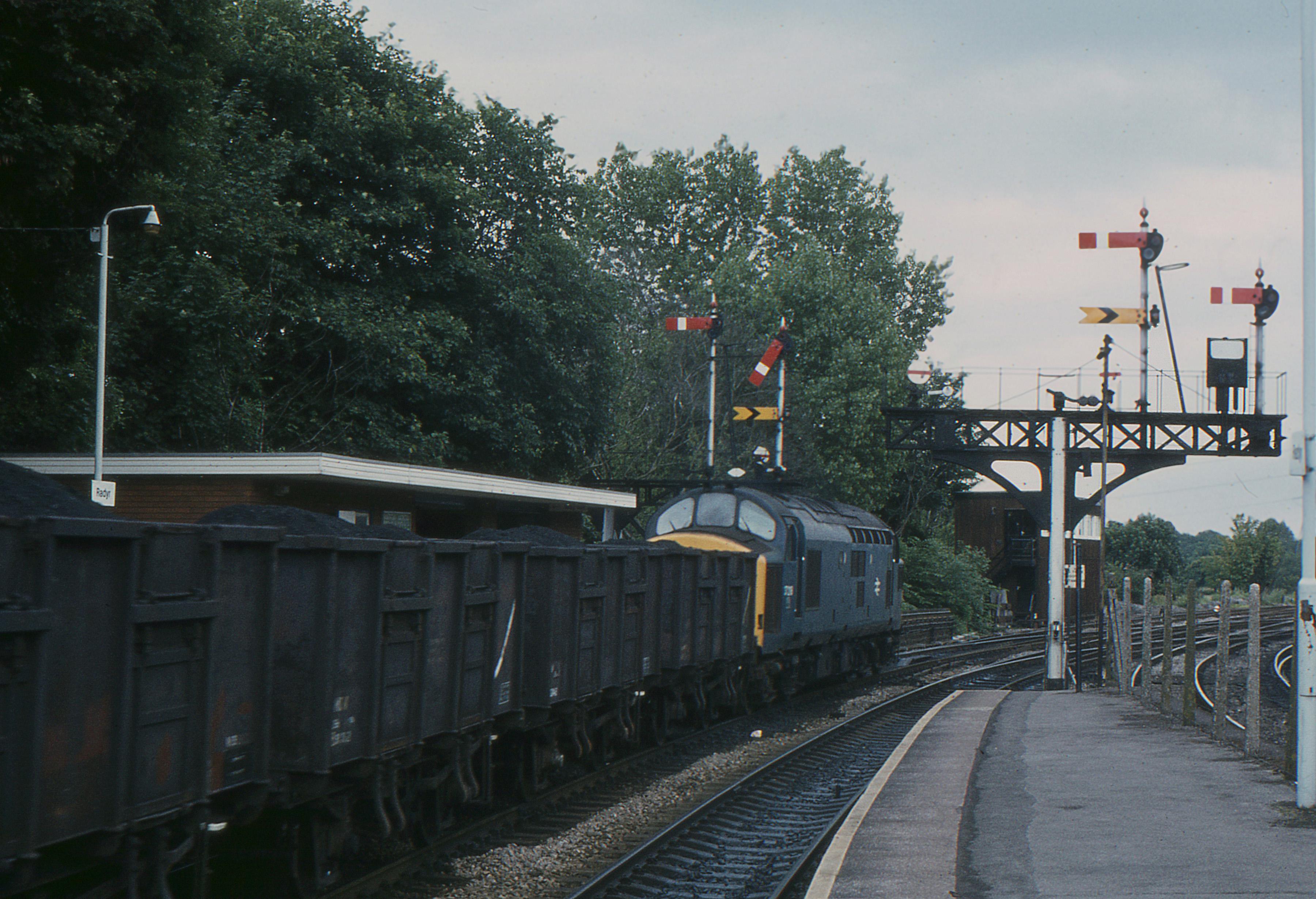 the signal at Radyr at its nadir in 1981 after the Down Relief to Llanduff had been lifted. Two extra signals were added by 1984 to turn back trains from Up Main to Down Main or to Down Branch (see issue 229). The fixing holes for these proved useful for the platform 1 starting signal dolls . [Photo: Alan Davies collection courtesy of Alan Coley.]
 Roland Twelftree is drilling bonding wire holes whilst Nick Yarwood digs the footings for the relocated barrow crossing.
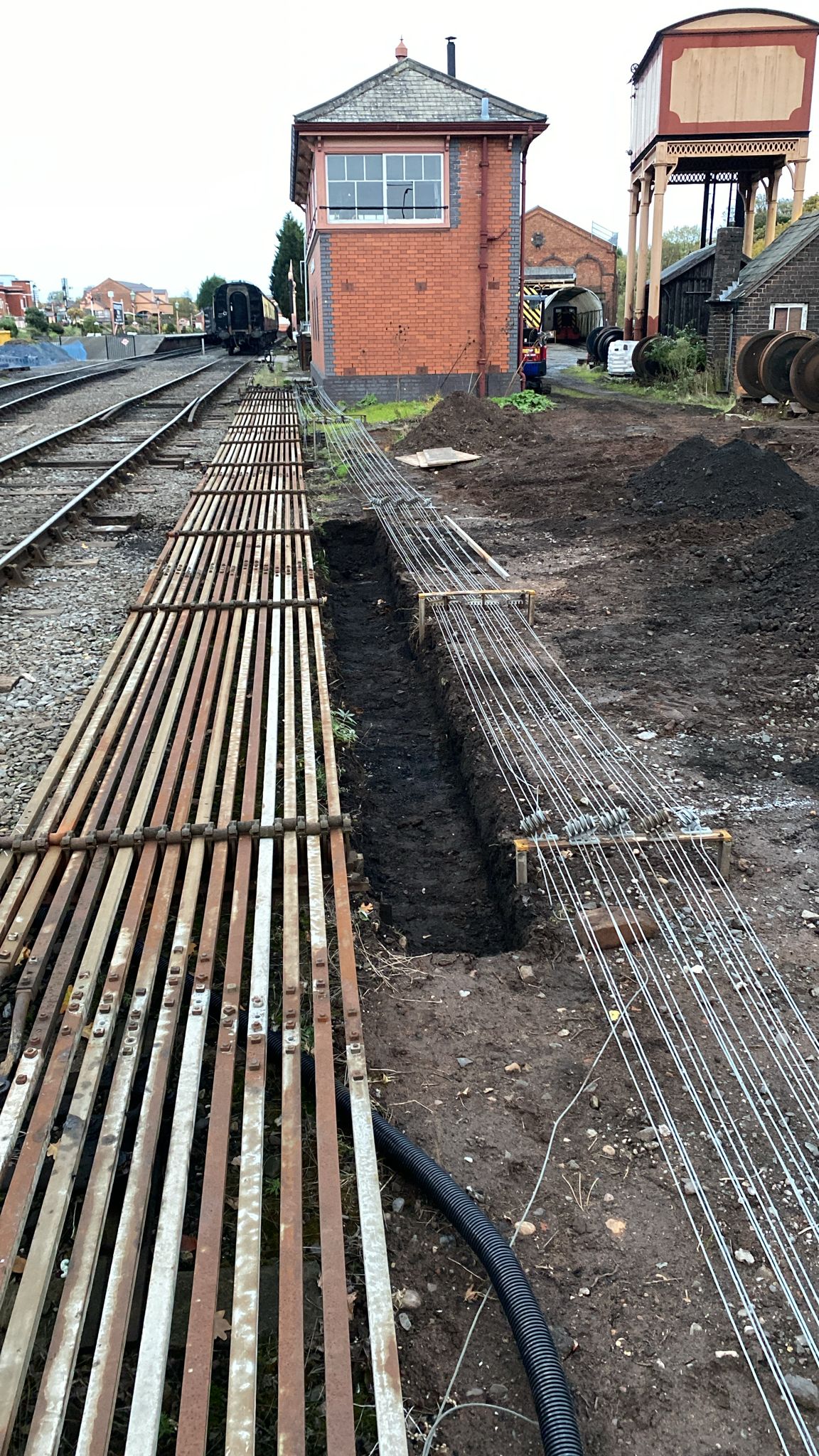 the footings to take the crossing over 15 sets of rodding, The signal wires have been lowered ready for the crossing to be installed. Fortunately the rodding height is satisfactory. [Photos: Matthew Morgan.]
Before the Autumn Steam Gala the mid-week staff rushed around checking all unusual moves and everything behaved perfectly until we left site - all of our work is guaranteed until we leave the carpark! By the time these notes are published in December, the ex-Radyr bracket should be complete with finials and a �topping-off‘ ceremony held. The wire run at by the box at Kidderminster has been diverted and lowered to accommodate the new barrow xing. Paul Marshall is masterminding how the new road will safely cross the wires and rods whilst leaving maintenance access.
Although our work has mainly focused on preparing for the P-Way to move 42B points and all that is entailed by that - new track circuit tails, bonding wires, diverted rodding runs, re-fitting electrical detection to 42B, amending the box diagram other work has also received due attention - the cranks on the Platform 2 Starting signal bracket at Bridgnorth had worn causing two cranks to foul - the temporary solution was to book off the calling on arm but a replacement crank base and newly machined spindle has been prepared for fitment once the MEWP is available. The vandalism at Foley Park is gradually being repaired as opportunity presents. We are keeping up with the box diagram:
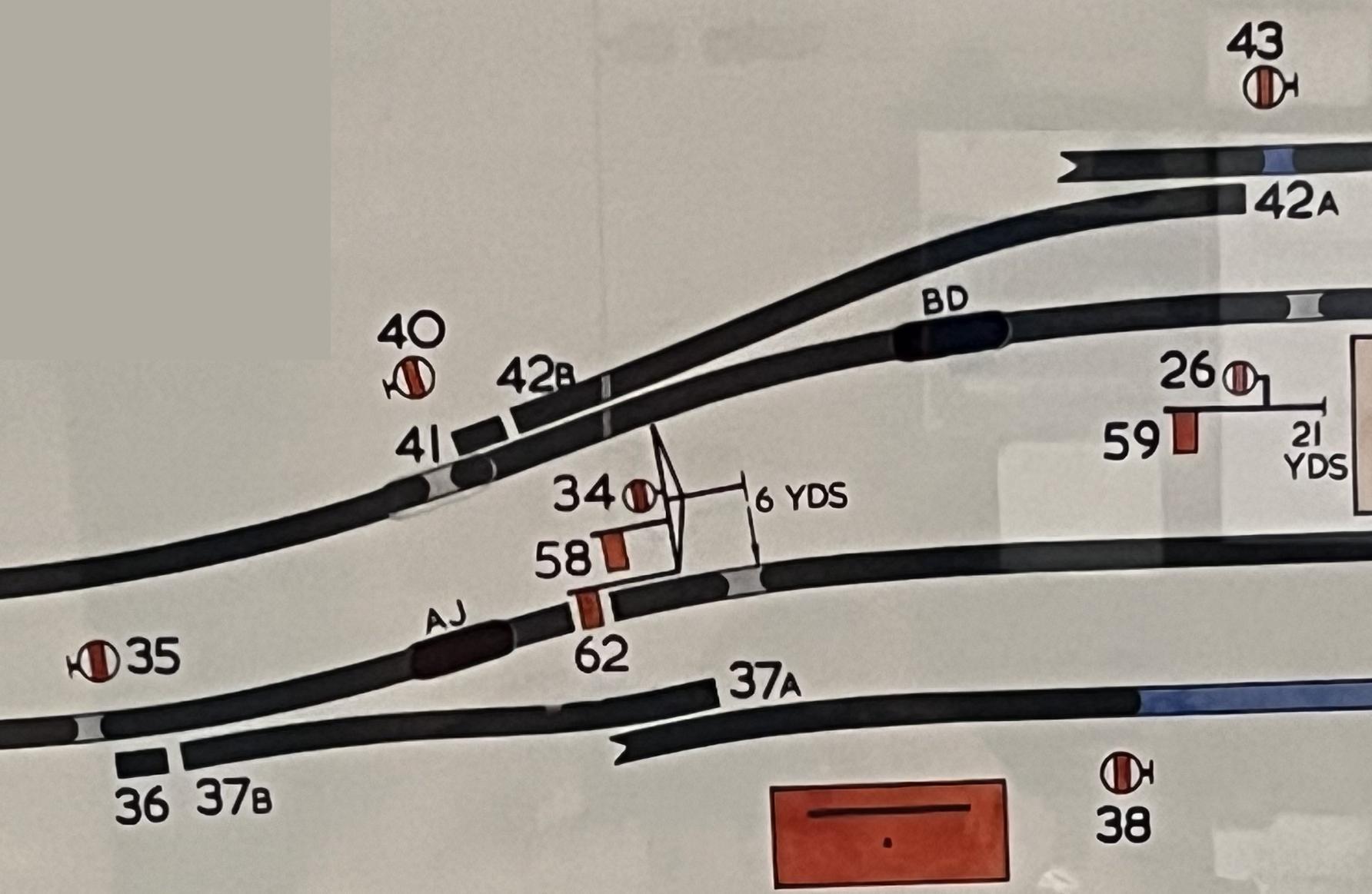 As at 14 September, the diagram shows half of the new signal and a slight bulge under 41 FPL shows the position of the new cut out for track circuit BD once 42B points have been moved. All will be revealed in due course!
We have replaced the box diagram yet again with the final signal layout plus an overlay sheet to show the current position. Drawing a signal box diagram is a rather unusual skill and we are indebted to Kevin Simpson for this work. It takes six people to remove the glass safely and about 2 hours to replace a diagram and reglaze. We have had that glass up and down 3 times as a result of recent works! The bulge under 41 FPL shows the new position of the TKE for BD track, relocated due to 42B‘s movement, under the overlay.
We welcome two new people to the department, Howard Davies, who has already put his extensive skills to use welding the new supports for the re-arranged wire run and Zach Gager who lowers our average age substantially, which is nice, other methods for lowering the average age would be less welcome! Other work diverting us from Kidderminster were a temporary repair on the Yard points (no. 14) at Arley pending sleeper replacement by P-Way and adjusting and re-setting after packing of the north end points at Arley (no. 16) by P-Way.
A reminder that this article, as well as other information on Signal Engineering, can be viewed in full colour here on the unofficial Signal Engineering web site.